

Marriage in Dubai: What Couples Get Wrong About Documents, Timelines and Legal Recognition
Table of Contents ▼
Dubai makes marriage look easy.
That is the first mistake.
From the outside, marriage in Dubai appears fast, digital, and tightly managed. Government channels are efficient. Civil marriage headlines sell speed. Venues and planners sell the celebration. Couples see the polished surface and assume the legal process works the same way.
It does not.
The ceremony is usually the least complicated part. The real pressure sits underneath it: whether your documents are usable in the UAE, whether you chose the right legal route, whether your timeline is based on reality, and whether the certificate will actually work in your home country after the wedding is over.
This is where couples lose weeks. Not at the ceremony. In the file.
Most people approach getting married in Dubai as if they are organizing an event. In reality, they are building a legal case across ministries, embassies, courts, and foreign registries. That difference is exactly why so many couples feel blindsided halfway through.
What couples think they need for marriage in Dubai vs what the UAE will actually accept
The first problem is usually not missing paperwork. It is the wrong paperwork.
Most couples start with the obvious: passports, visa copies, proof of single status, and divorce papers if one of them was previously married. That sounds complete. Often, it is not.
For marriage in Dubai, the real question is not whether a document exists. It is whether the UAE can legally rely on it.
That is a much stricter test.
Take proof of marital status. Couples often say, “We have a single certificate,” as if that settles it. It does not. One country may issue a certificate of no impediment. Another may issue only a sworn declaration before a notary. Some embassies issue support letters. Some issue nothing useful at all. Couples treat these documents as equivalents because they serve the same purpose back home. UAE authorities may not.
This is where files start failing quietly.
The same issue appears with divorce documents. A decree can be genuine and still be unusable. That is one of the harshest realities of getting married in Dubai. A valid divorce judgment is not the same thing as a usable UAE marriage file. If the decree is provisional, missing a final stamp, badly translated, or impossible to trace through the issuing authority, the case can stop immediately.
That is why document rejection feels so unfair to couples. The file may be perfectly logical to them. The UAE is not judging logic. It is judging legal form, finality, traceability, and admissibility.
And those are not the same thing.
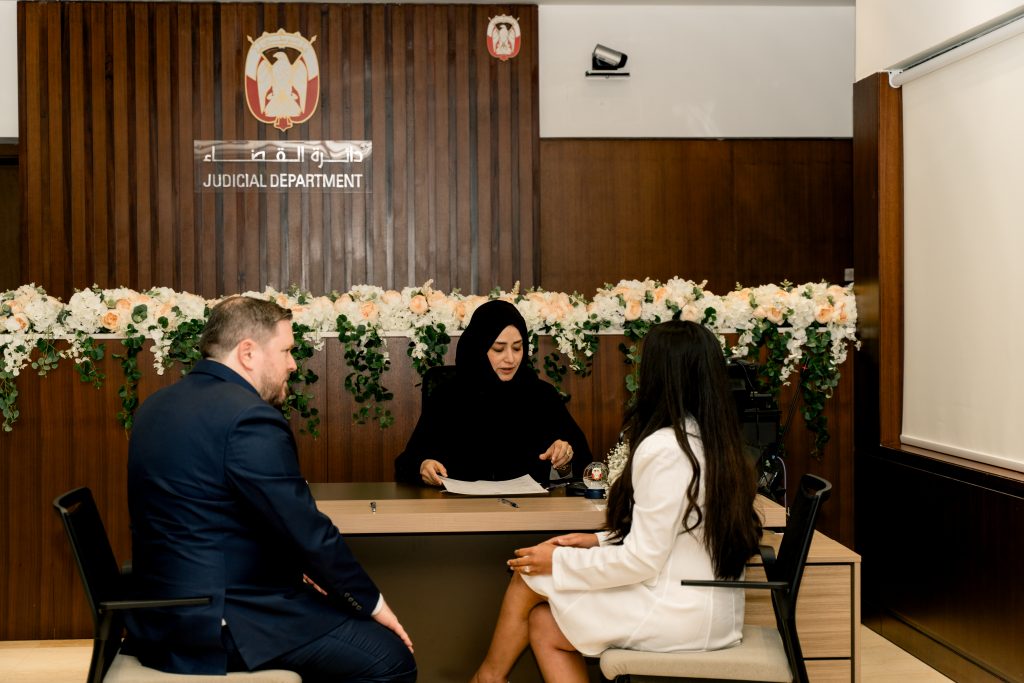
Legalization is where marriage in Dubai stops being “fast”
If one step quietly destroys timelines, it is legalization.
This is the part couples almost always underestimate. They hear “attestation” and picture a stamp. In practice, legalization is a chain of approvals that determines whether the rest of the case can move at all.
For most foreign-issued documents used in marriage in Dubai, the chain looks like this: the document is issued in the home country, authenticated by the relevant authority, attested by the UAE embassy or consular channel, then attested again inside the UAE. Miss one step, and the document does not become slightly delayed. It becomes unusable.
That difference matters.
A couple may read about a “24-hour” marriage service and assume the entire process can be completed in a day or two. Technically, an appointment may move quickly once the file is perfect. Practically, the file is what takes time. The wedding date is rarely what delays the case. The paperwork usually does that before a court date even exists.
This is also where mixed-nationality couples run into friction. One partner may come from a country with a fast apostille or authentication system and finish in days. The other may need ministry approvals, embassy slots, and multiple rounds of document handling. Once that happens, the faster side of the file becomes irrelevant. The slower side sets the pace.
That is why couples who expect one week often spend three or four weeks just getting their documents into the same legal shape.
For marriage in Dubai, legalization is not background admin. It is the clock.
Civil marriage in Dubai, Sharia marriage in Dubai, and interfaith cases do not run on the same timeline
Another common mistake is asking the wrong question.
Couples ask, “How long does marriage in Dubai take?” But there is no single answer because there is no single process.
For non-Muslim couples, civil marriage in Dubai is usually the cleanest route. If documents are compliant, residency rules are met where required, and an appointment is available, the procedure can move quickly. That is why fast civil marriage headlines exist. What they leave out is that speed starts only once the file is already correct. For most couples, the real timeline is two to four weeks, not one day.
Sharia marriage in Dubai follows a different legal structure. It is not just a religious ceremony with extra formality. A bride’s guardian must be present or formally represented, two male witnesses are required, and premarital medical screening is mandatory. That screening is a legal requirement, not a formality, and it can delay or interrupt the case.
This is why Sharia cases usually take longer—and why couples who compare civil and Sharia timelines as if they are equivalent often misread the process.
Interfaith cases are more restrictive still. A Muslim woman cannot legally marry a non-Muslim man in the UAE unless he converts to Islam. Many couples discover this only after starting a Sharia route. At that point, the issue is no longer timing. It is legal fit. The case may need to reset entirely: convert, change jurisdiction, or abandon that route.
That is where expert advice matters most. Some cases should be redirected early, not repaired late.

A marriage certificate in Dubai can be valid in the UAE and still create problems abroad
This is the issue couples leave until far too late.
They assume that once the certificate is issued, the process is over.
For the UAE, it may be. For their home country, maybe not.
A marriage certificate in Dubai can be valid where it was issued and still require further action before another country will recognize or use it. This is one of the most expensive assumptions couples make, especially when immigration, spouse visas, inheritance rights, child registration, or surname changes are involved.
Recognition problems do not begin after the wedding. They begin much earlier—when couples assume UAE validity automatically means home-country usability.
Often, it does not.
Some countries require official translation. Some require attestation for international use. Others require the marriage to be registered through a civil registry, embassy, or national population system before it can be used for legal purposes. Until that happens, the certificate may exist but still be difficult to use for the reason the couple actually got married in the first place.
This is where the second wave of delays begins.
The marriage is complete, but the file is not finished.
That is why recognition should be checked before the ceremony, not after it. If the marriage will be used for immigration or legal status abroad, the post-marriage recognition route should be part of the strategy from day one.
When Dubai is no longer the best route
Dubai is a strong option when the case fits the system.
That means the couple has the right eligibility, the right documents, the right legal route, and enough time to legalize everything properly. When those factors align, marriage in Dubai can be efficient.
When they do not, Dubai becomes the wrong tool for the case.
This usually happens in four situations: when residency is missing for the intended route, when interfaith restrictions make Sharia marriage unworkable, when core documents are difficult to issue or legalize in time, or when the marriage needs to be completed quickly for visa, pregnancy, relocation, or family-status reasons.
This is where smart couples stop asking, “Can we do it in Dubai?” and start asking, “Should we still be doing it in Dubai at all?”
Sometimes the better answer is Abu Dhabi, especially where civil marriage is available on more flexible terms. Sometimes the better answer is another jurisdiction built specifically for foreign couples. That is not a workaround. It is legal strategy.
A couple can waste weeks proving that Dubai is possible when another jurisdiction would have made the case cleaner from the start.
That is the difference between planning emotionally and planning correctly.
Final word
Couples get confused about marriage in Dubai not because the rules are unknowable, but because they underestimate the type of process they are entering.
This is not mainly a wedding issue. It is a document, jurisdiction, and recognition issue.
The ceremony is visible. The risk is hidden.
What determines whether a case moves smoothly is straightforward:
- whether the documents are acceptable in UAE form, not just in home-country form
- whether legalization has been completed in the right order
- whether the correct legal route was chosen from the start
- whether the certificate will work in the country where it actually needs to be used
Miss one of those, and the process rarely fails at once. It stretches, stalls, or resets.
That is why some couples move quickly and others spend weeks correcting preventable mistakes. The difference is usually not luck. It is whether they treated getting married in Dubai as an event or as a legal procedure.
In this process, that distinction changes everything.
FAQ – Marriage in Dubai
What documents are required for marriage in Dubai?
Usually passports, visa copies, and proof of marital status such as a certificate of no impediment, single status document, or divorce decree. The real issue is whether the document is acceptable in UAE legal form and fully legalized.
Can a valid document from my country still be rejected in Dubai?
Yes. This happens often. A document can be legally valid where it was issued and still fail in the UAE because it is not final, not in the right format, not properly translated, or not legalized through the required chain.
Can tourists get married in Dubai?
For many civil routes, at least one party usually needs UAE residency. Tourists often find Dubai more restrictive than expected and may need to consider Abu Dhabi or another jurisdiction.
How long does marriage in Dubai really take?
The ceremony may take a day. The real timeline is usually two to four weeks for a clean civil case and longer for Sharia or document-heavy cases. Legalization is often what controls the timing.
Is a marriage certificate from Dubai automatically recognized abroad?
No. Recognition depends on the rules of the destination country. Translation, attestation, or domestic registration may still be required before the certificate can be used for immigration or legal status.
When should we consider Abu Dhabi or another country instead?
If residency is an issue, interfaith restrictions apply, or your documents are likely to delay the file, another jurisdiction may be legally cleaner and faster.
CTA – Easy Wedding Dubai
Before you book anything, check the legal route
Most delays in marriage in Dubai do not come from the wedding itself. They come from the wrong file, the wrong jurisdiction, or the wrong assumptions.
At Easy Wedding Dubai, we help couples identify the right route before they waste time on the wrong one. That includes checking document suitability, spotting legalization risks early, assessing whether Dubai is still the right jurisdiction, and planning for certificate recognition in the country where it will actually be used.
If your case involves mixed nationality, interfaith restrictions, missing documents, residency questions, visa deadlines, or uncertainty about recognition abroad, sort the legal path first.
Speak to Easy Wedding Dubai for a case-specific roadmap before you commit to a process that may need to be restarted later.


